Friday night on Jonker Street
Every weekend a quiet street of antique shops and clan houses becomes the loudest, most crowded and most delicious few hundred metres in the city.
2 min read
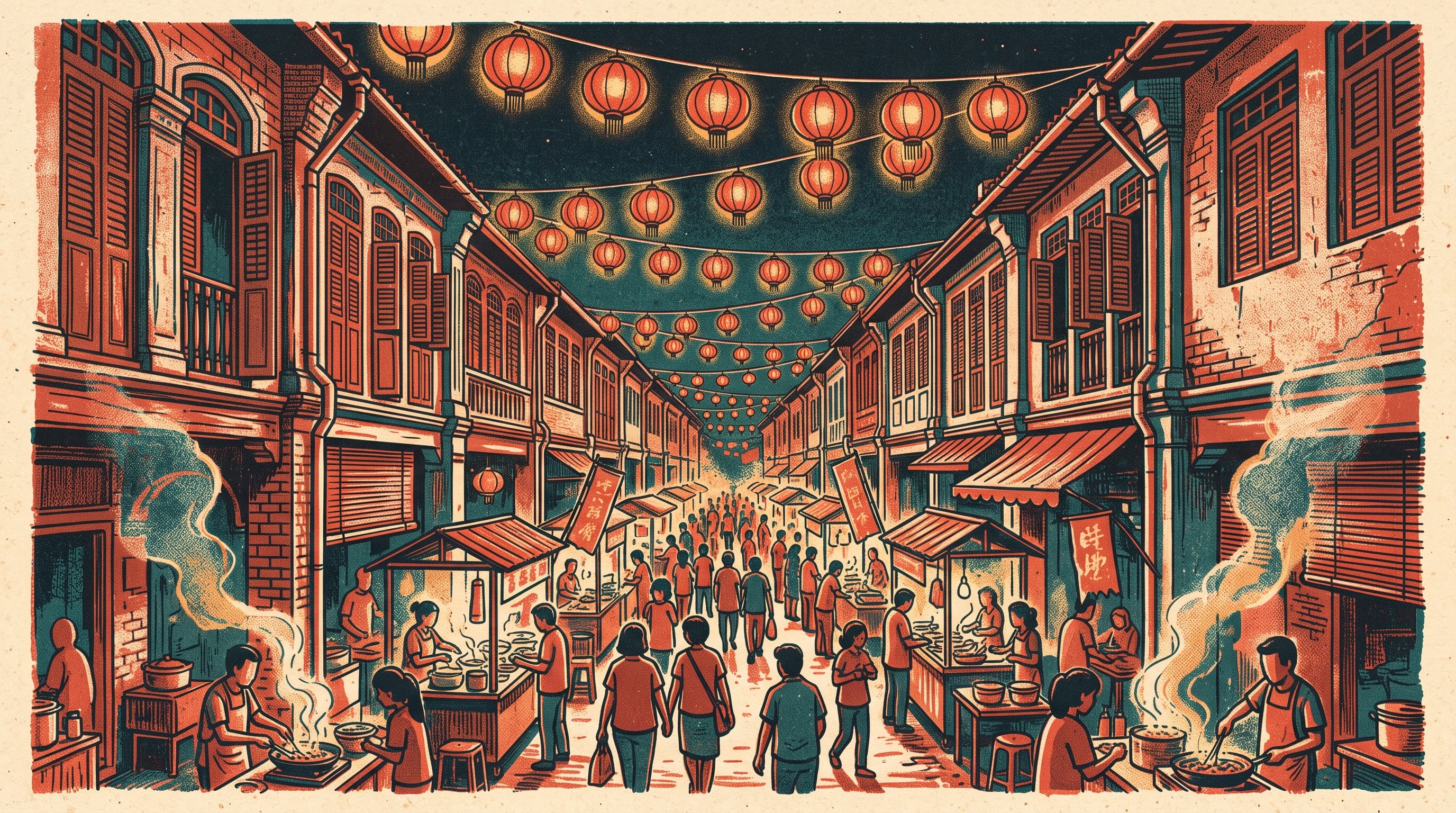
By day, Jalan Hang Jebat is a narrow street of old shophouses in Melaka’s Chinatown. There are antique dealers with porcelain stacked to the ceiling, clan associations behind carved doors, coffee shops, a hardware store or two, and tour groups passing through on their way somewhere else. Almost everyone calls it by its older name, Jonker Street, and in the heat of a weekday afternoon it can feel half asleep.
Come back after dark on a Friday and you will not recognise it. From early evening, stalls go up along both sides and down the middle, the traffic is shut out, and by eight o’clock the street has become a single slow river of people. The night market runs on Friday, Saturday and Sunday evenings, and on a holiday weekend it can take half an hour to walk its length.
What to eat, in roughly this order
The market is partly about shopping, but mostly it is about eating while walking. A short and incomplete list:
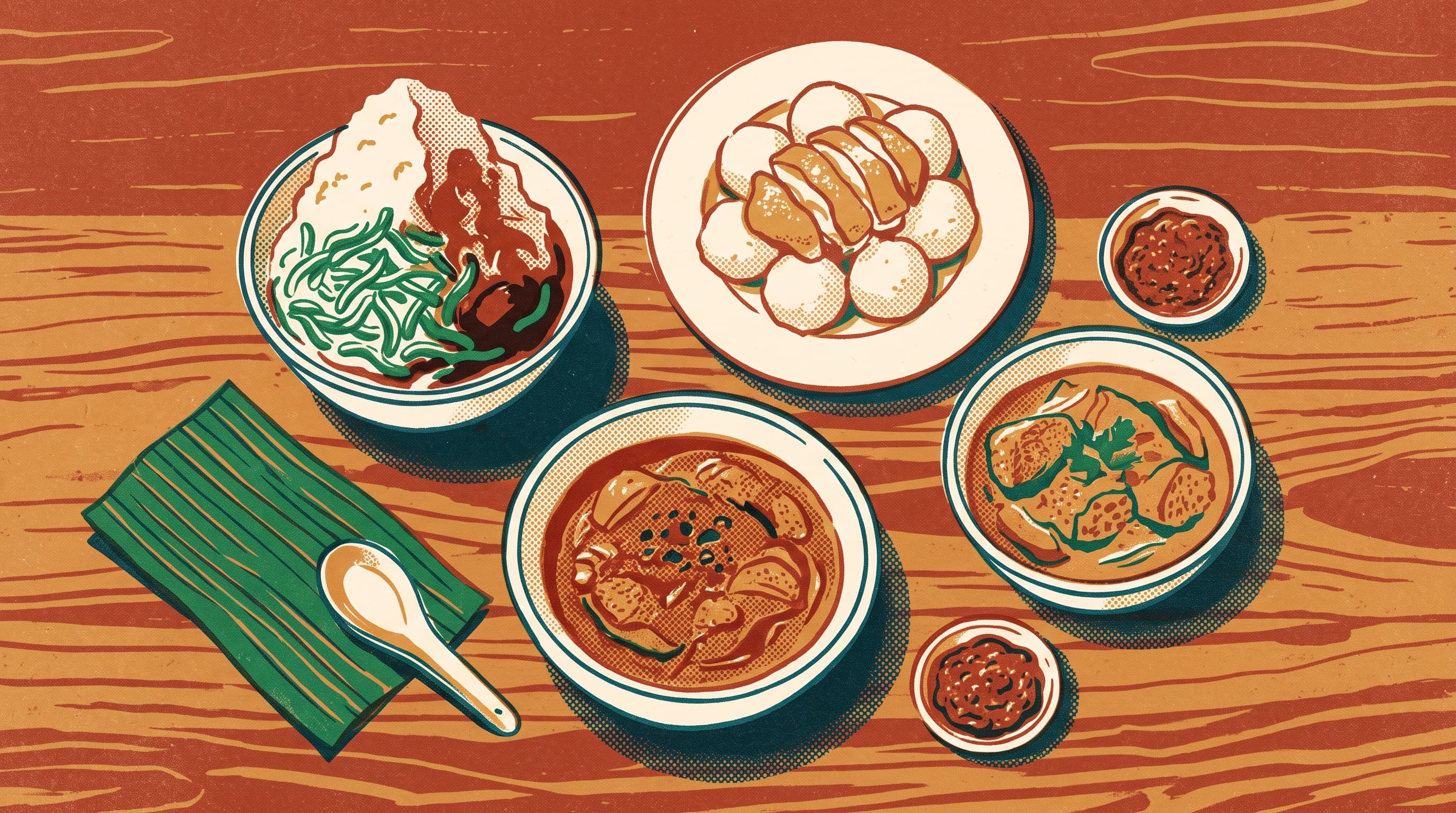
- Chicken rice balls. Melaka’s own take on Hainanese chicken rice, with the rice pressed into balls about the size of a ping pong ball. Nobody agrees why. One story says it kept the rice warm for workers at the old port.
- Cendol. Shaved ice, coconut milk, green pandan jelly and dark, smoky gula Melaka, the palm sugar that carries the city’s name.
- Popiah. Soft spring rolls filled with braised jicama, egg and crushed peanuts, rolled while you wait.
- Something fried, on a stick. There will be dozens of options. Choose the stall with the longest queue of locals.
Between the stalls
It is worth stepping off the main street now and then. A block away, along Jalan Tukang Emas, the old goldsmiths’ street, and its continuation, a mosque, a Chinese temple and a Hindu temple stand within a few minutes’ walk of one another. The Kampung Kling Mosque has a minaret that looks like a pagoda. The Cheng Hoon Teng Temple, founded in the seventeenth century, is usually called the oldest working Chinese temple in the country. The Sri Poyyatha Vinayagar Moorthi Temple dates from 1781. People call this stretch Harmony Street, and on a busy night you can hear the call to prayer, smell temple incense and catch a karaoke ballad drifting over from the market, all at once.
When to go
The crowds are heaviest between eight and ten. If you want to see the street rather than the backs of other people’s heads, come early, while the stalls are still unpacking, or late, after the families have gone home and the last vendors are selling off what is left. Bring some cash in small notes, and some patience. Melaka will supply the rest.
The market is not the old Jonker Street, exactly. The antique trade has thinned, and many of the families who once lived above the shops have moved out to the suburbs. But the street has always been about trade, and on a Friday night, with thousands of people bargaining, eating and taking photographs under the lanterns, it is doing what Melaka has done since the beginning.
Filed under the present tense