Palm sugar, rice balls and devil’s curry
Melaka’s food is its history in edible form: Malay, Peranakan, Portuguese-Eurasian and everything in between, often on the same table.
2 min read
If you want to understand who has lived in Melaka, eat your way through it. Six centuries of traders, settlers, sailors and soldiers each left something in the kitchen, and the city’s cooking is less a single cuisine than a long conversation between several. Here is where to begin.
Malay
Asam pedas is the dish Melaka claims above all others: fish, often stingray or mackerel, simmered in a sour, fiery gravy of tamarind and chilli, fragrant with torch ginger flower, with okra and tomato added at the end. Every family has its own version, and every family’s version is the correct one. Eat it with plain rice and something cold to drink, and do not wear white.
Peranakan
The Peranakan Chinese, also called the Baba Nyonya, descend from Chinese traders who settled in the region centuries ago and made it home, and their cooking, known as Nyonya food, is the most celebrated in the city. Try ayam pongteh, chicken and potatoes braised slowly with fermented soybean paste and palm sugar until the sauce turns dark and glossy. Try Nyonya laksa, rich with coconut milk. Save room for kuih, small, brightly coloured cakes of rice flour, coconut and pandan that are sold by the tray in the morning and are usually gone by lunch.
Kristang
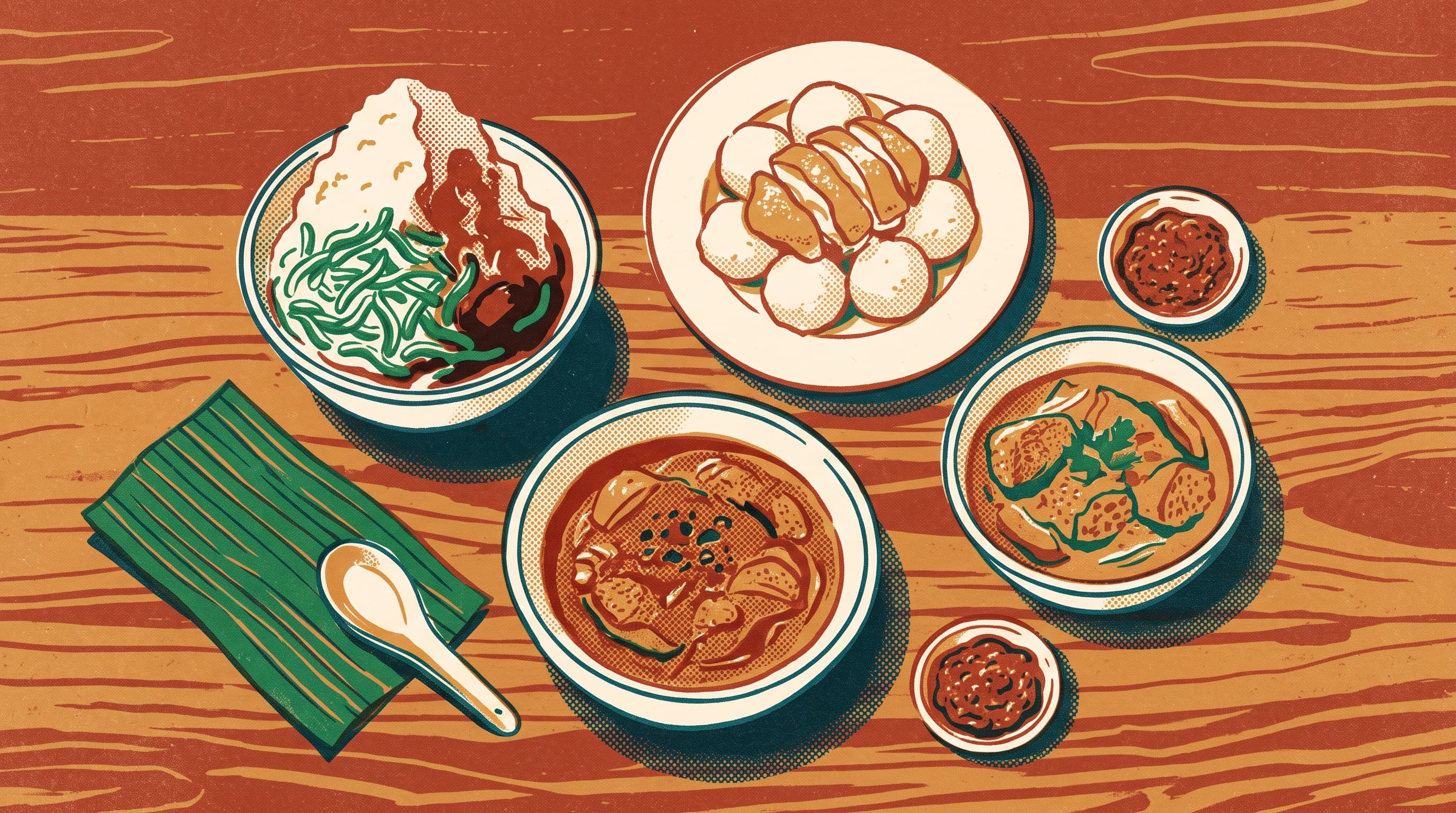
At the Portuguese Settlement by the sea, the Kristang community, descendants of the Portuguese who arrived in 1511 and the local families they married into, cook dishes you will struggle to find anywhere else. The most famous is curry debal, devil’s curry: a fierce, vinegar-sharp curry traditionally made after Christmas with the leftover roasts. It is far better than leftovers have any right to be.
Melaka’s own
Some dishes simply belong to the city. Satay celup turns satay into a group activity: you choose skewers of meat, seafood, tofu and vegetables from a fridge, cook them yourself by dipping them into a shared pot of simmering peanut sauce, and pay by counting the empty sticks. Chicken rice balls are exactly what they sound like. And cendol, eaten all over Malaysia, is never quite the same as it is here, where the gula Melaka is darker and smokier and poured with a generous hand.
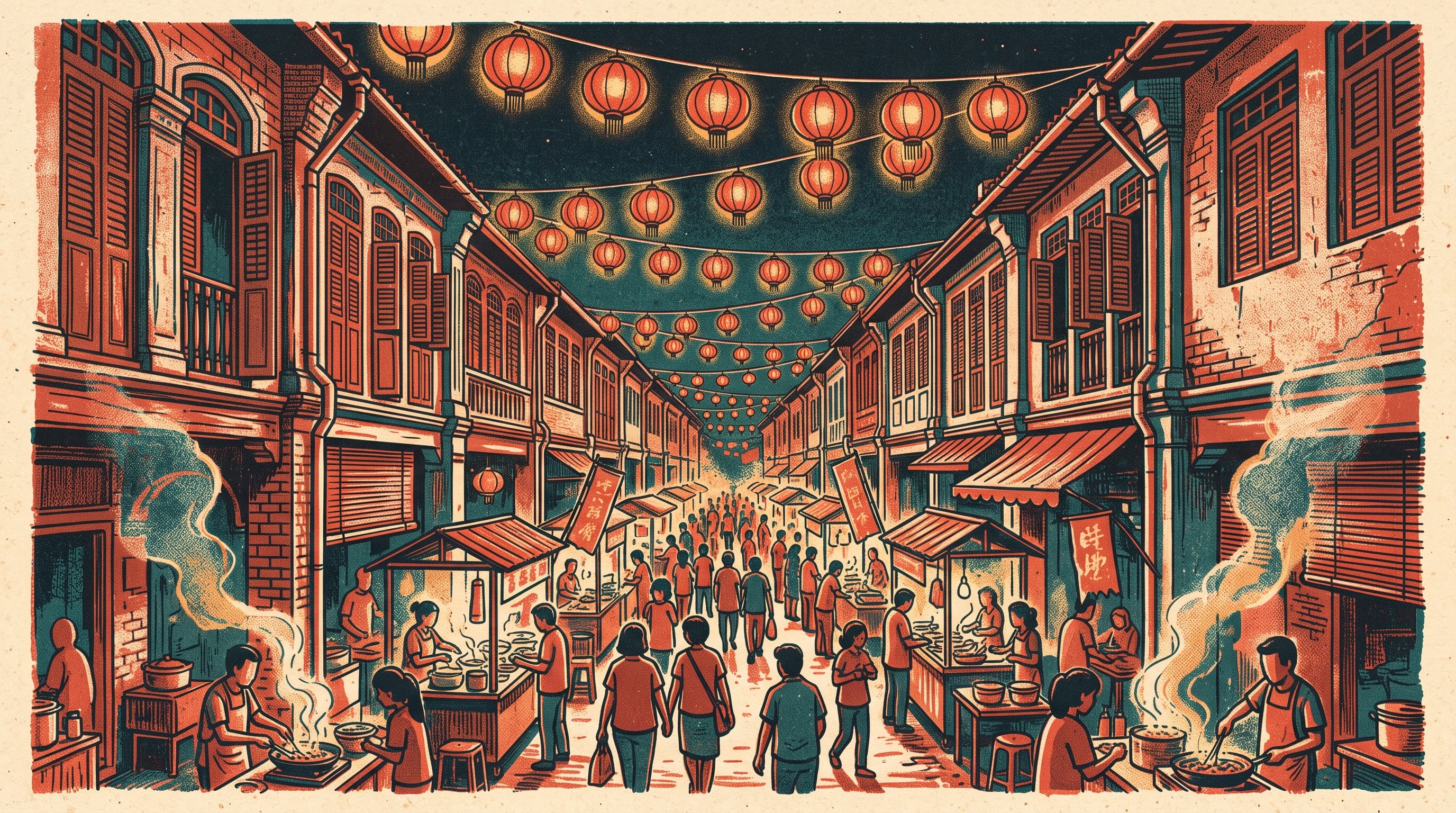
None of these kitchens stayed separate for long. Nyonya cooks borrowed from their Malay neighbours, Kristang recipes use local spices alongside Portuguese vinegar, and every stall on Jonker Street seems to have taken a little from all of them. That may be the best argument for Melaka’s history. You can taste that it happened.
Filed under the present tense